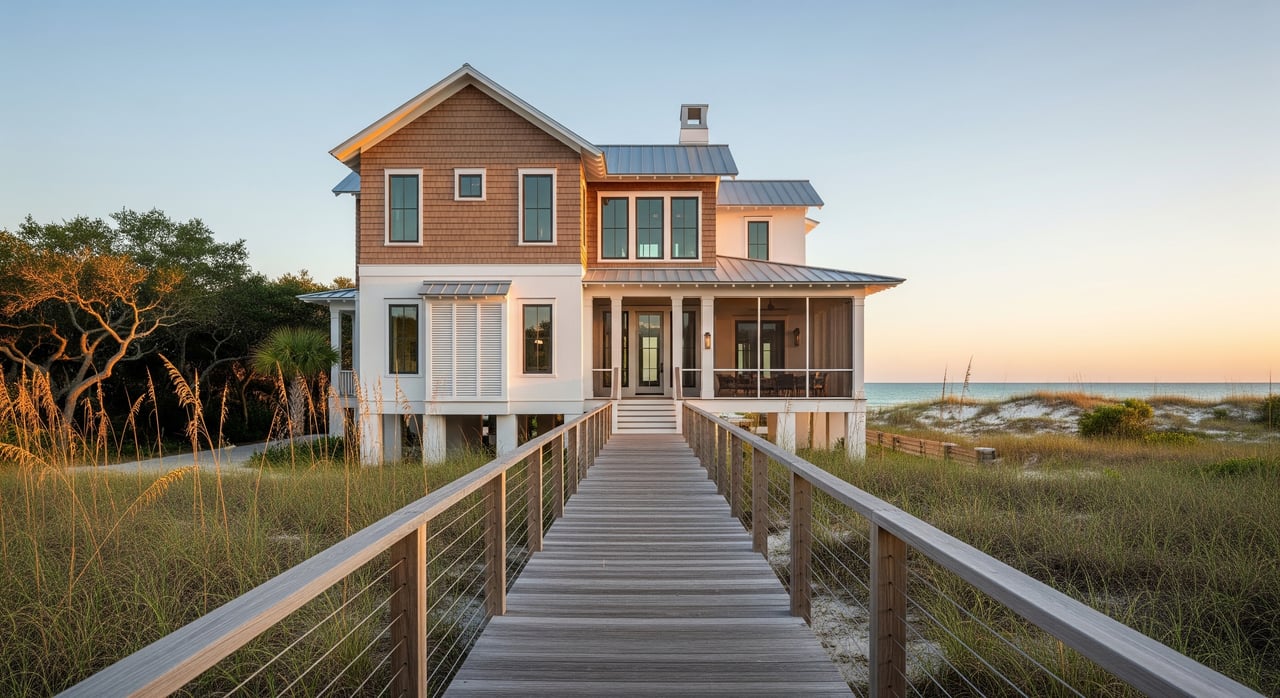
Thinking about building in WaterSound Origins but not sure where to start? If you live, work, or vacation in the 32413 Bay County area, you want clarity on location, amenities, and the build process before you make a big decision. This guide shows you what to verify, how to plan a new build, and the key decisions that shape cost, timeline, and daily life. Let’s dive in.
WaterSound Origins at a glance
WaterSound Origins is part of the broader 30A and South Walton market area, where master‑planned communities are known for coastal architecture, trails, and amenity‑rich living. In master‑planned communities, you typically see a mix of home types, shared amenities, and design standards that preserve a consistent look and feel. If you are based in 32413, remember this ZIP is in Bay County, so confirm county jurisdiction and driving times when you compare neighborhoods.
Before you commit, request the developer’s current phase map, lot inventory, and amenity timeline. Ask for the governing documents that outline how the community operates, including any separate HOA or club structure for amenities. These items help you understand today’s options and what is coming next.
Amenities, trails, beach and golf
Amenities shape your lifestyle and ongoing costs. In coastal master‑planned communities, you often find parks, playgrounds, pool and fitness facilities, multi‑use trails, and access to outdoor recreation. Confirm which amenities are included with your HOA, which are for residents only, and which require a separate club membership with dues.
Trails and connectivity matter if you plan to walk or bike. Ask for the most recent trail map, whether paths are ADA accessible, and if there is direct connectivity to public beach access or regional trail networks. If you plan to host guests, find out about parking rules and trail etiquette.
Beach access is a top question. Verify whether access points are private, public, or tied to a club, and whether there are dune crossovers, seasonal rules, or parking limits. If access is via a separate property or membership, ask about guest policies and fees so you can set realistic expectations.
Golf access near 30A can be private, semi‑private, or separate from the HOA. Confirm whether tee times are available to residents, renters, or members only, and whether any fees apply. These details influence your budget and your weekly routine.
Lots and home types
Most coastal master‑planned communities offer a range of lots and product types. You will often see coastal cottages with smaller footprints, traditional single‑family homes on small to mid‑size lots, and in some phases, attached options such as carriage homes or townhomes. Communities may offer a mix of speculative homes, semi‑custom plans, and opportunities to build custom with approved builders.
Lot size ranges can vary by phase. As a starting point along 30A, cottage lots often run about 3,000 to 7,000 square feet, smaller single‑family lots about 6,000 to 12,000 square feet, and estate lots can extend to 0.25 acre or more. Always review the recorded plat, lot width and depth, and any easements, since the buildable envelope determines your realistic house footprint.
Ask for a recent survey and site plan before you finalize a lot. Confirm utility locations, drainage, and any landscape or tree protection rules that could shape your layout. A little homework here prevents redesigns and delays later.
Design standards and review
Expect Covenants, Conditions and Restrictions, along with Design Guidelines overseen by a Design Review Committee or Architectural Review Board. Typical standards include material and color approvals, roof pitch, porch requirements, window styles, garage placement, and minimum or maximum home sizes. Confirm the design review timeline and whether final DRC approval is required before you can submit for a county building permit.
Height, setbacks and coverage
Height limits, front and side setbacks, and maximum lot coverage vary by community and county zoning. Request these metrics from the recorded documents and the county’s land development code. Your architect and builder will use these numbers to shape massing, porches, and parking.
Flood zones and foundations
Along the coast, FEMA flood zones such as A, AE, or V are common. Verify the flood zone and Base Flood Elevation for your specific lot. Elevated floor systems are typically required in V zones and often in AE zones, which can influence foundation type, entry stairs, and storage.
Mechanical systems usually need to be above the Base Flood Elevation, and flood vents or other details may be required. Elevation and foundation choices are significant cost drivers and also affect insurance premiums, so plan them early.
Utilities and streets
Confirm whether your lot has central water and sewer, plus availability of natural gas, electrical service, and fiber or high‑speed internet. Check whether streets are public or private, since private streets may be maintained by the HOA and could carry maintenance or assessment responsibilities.
New‑build process and timeline
Building in a coastal master‑planned community follows a predictable sequence. Here is a typical path to plan for:
- Lot selection and contract. Obtain the plat, legal description, and a recent survey.
- Review the CCRs and Design Guidelines. If available, request a pre‑application meeting with the DRC.
- Engage your architect or plan designer and select a local builder, or choose a developer‑approved plan.
- Create a site plan with grading and drainage strategies. Confirm tree removal rules and stormwater retention requirements.
- Submit for DRC approval and then apply for the county building permit and trade permits. Verify the correct county jurisdiction for your lot.
- Arrange utility taps and pay any impact or connection fees. If amenities require separate memberships, complete those agreements.
- Begin construction, from site work and foundation to framing and finish.
- Complete final inspections, obtain your certificate of occupancy, and follow HOA move‑in procedures.
Plan review and permitting often take 4 to 12 or more weeks, depending on design complexity and county workload. Construction typically runs 6 to 12 or more months, depending on home size, site conditions, labor availability, and the season. Your builder can help you create a realistic schedule with contingencies.
Cost drivers to expect
Your total budget combines lot cost, site work, and the house itself. Coastal builds often include elevated foundations, hurricane‑rated windows and doors, and corrosion‑resistant materials, all of which add cost but improve durability. Site prep, fill or elevation requirements, and drainage can be significant line items in coastal zones.
Soft costs matter too. Expect design and engineering fees, surveys, DRC review fees, impact fees, and elevation certificates. If the community has a private club component, account for initiation and dues where applicable.
Financing and insurance
If you are building custom, a construction loan usually funds the project through a draw schedule tied to approved plans. Lenders consider flood zone, elevation, and HOA management when they underwrite. If you are buying a completed spec home, a conventional mortgage is often available after the certificate of occupancy is issued.
Flood insurance may be required if your property is in a Special Flood Hazard Area. Premiums depend on your elevation relative to the Base Flood Elevation, foundation type, and the specific flood zone. Wind and hurricane coverage can carry separate deductibles or policies in coastal markets, so request quotes early to avoid surprises.
Short‑term rentals and leasing
Rental rules are set by the community’s governing documents and county ordinances. Confirm whether short‑term rentals are allowed, any minimum stay requirements, guest registration needs, and how the HOA enforces the rules. These policies influence your rental strategy, financing, and resale value.
Resale and long‑term value
For long‑term planning, understand the HOA fee structure and exactly what those fees cover, such as amenity maintenance or private road upkeep. Ask about any planned phases or nearby infrastructure that could affect views, traffic, or noise. Beach access type and any club memberships can influence value over time.
Collect recent sale comps for similar homes and lots, current inventory, and average days on market. These data points help you choose a phase, lot type, and home size that fit your goals.
Decision checklist
Use this quick list to organize your next steps:
- Verify flood zone, Base Flood Elevation, and likely foundation type for your lot.
- Review CCRs and Design Guidelines, plus the DRC approval timeline and submittal requirements.
- Confirm utility availability, including sewer, gas, and internet, and whether streets are private.
- Understand HOA fees, any separate club dues, and what they cover.
- Confirm short‑term rental rules if rental income or flexibility matters to you.
- Request the current phase map, amenity timeline, and any construction or access updates that could affect your lot.
How Boswell Builders can help
When you build near 30A, local knowledge, integrated design, and on‑site leadership make the difference. With in‑house design and owner‑led supervision, Boswell Builders helps you align vision, budget, and community standards from day one. You get a single team to coordinate DRC submittals, estimate site and foundation work, and specify coastal‑ready materials that look great and last.
Our team has decades of experience delivering custom, semi‑custom, and spec homes across Emerald Coast communities, including 30A neighborhoods with detailed design guidelines. We combine craftsmanship with predictable process, so you can move from concept to keys with fewer surprises. If you are exploring a build in WaterSound Origins or nearby communities, we would love to talk through your goals and next steps.
Ready to plan your coastal home with a trusted local partner? Connect with Boswell Builders to get started.
FAQs
What should a 32413 buyer confirm about location and county rules?
- Verify the lot’s county jurisdiction, driving times from 32413, and any county‑specific permitting or inspection requirements before you finalize a lot.
How do I know which WaterSound Origins amenities are included?
- Review the HOA documents and any separate club agreements to confirm what is resident‑only, what requires dues, and what is still planned versus delivered.
What are typical lot sizes and build envelopes near 30A?
- Cottage lots often run about 3,000 to 7,000 sq ft, small single‑family lots about 6,000 to 12,000 sq ft, and estate lots can be larger, but always confirm the buildable envelope on the recorded plat and survey.
How long does design review and permitting take for a new build?
- Plan on 4 to 12 or more weeks for DRC and permits depending on design complexity and county workload, then 6 to 12 or more months for construction.
How do flood zones affect design and insurance?
- Lots in A, AE, or V zones often require elevated floor systems and placement of mechanicals above Base Flood Elevation, which impacts costs and flood insurance premiums.
Are short‑term rentals allowed in WaterSound Origins?
- Check the CCRs and county ordinances for permitted rental terms, guest registration rules, and enforcement, since policies vary by community and phase.