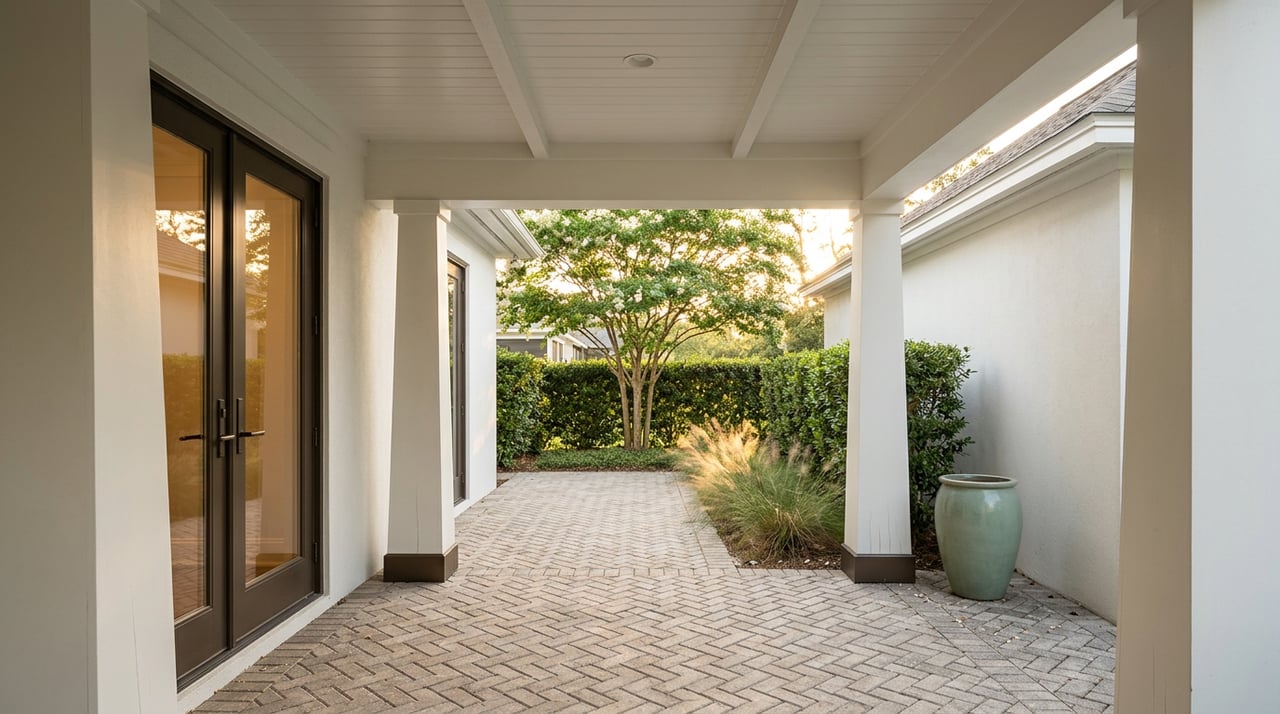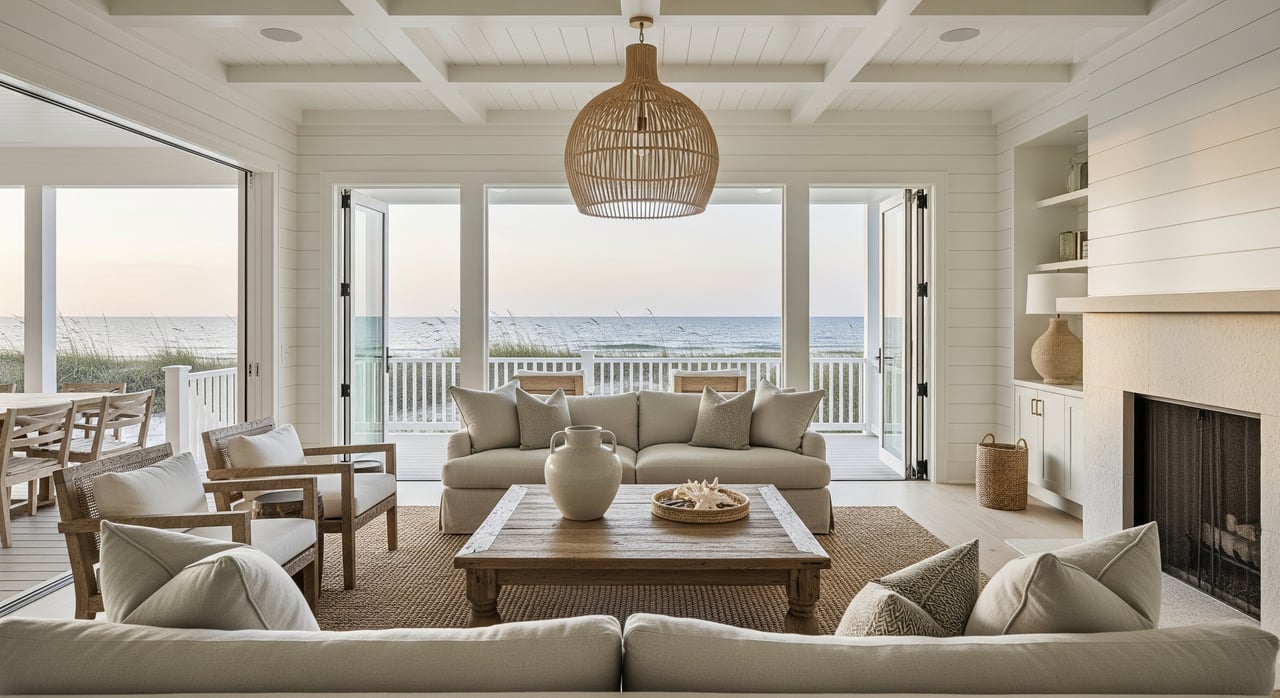
Is your Pinterest board full of breezy coastal rooms, but you are not sure which ideas actually work on 30A? You are not alone. The Emerald Coast rewards style and light, yet salt, sun and humidity test every finish. In this guide, you will learn the Florida coastal design trends shaping 30A homes today, along with practical specs and a vision‑board checklist you can bring to your builder meeting. Let’s dive in.
What makes 30A style work
30A living blends casual elegance with purpose. You see open porches, bikeable streets, and homes that frame Gulf light with calm, neutral interiors. Buyers value authentic materials, relaxed indoor‑outdoor rooms, and finishes that hold up to salt air and summer storms.
Local design leans on New Urbanist roots and a coastal cottage vernacular. The look is easy, the details are thoughtful, and durability matters. Trends here reflect that balance, which is why you will notice weathered textures paired with engineered, resilient materials.
Muted coastal palettes
Soft neutrals and sea‑glass tones are leading interiors. Think warm whites, sand beiges, driftwood greys, pale blues and muted greens, with darker accents for contrast. These palettes feel bright without glare and connect to dunes and seascape views.
For performance, choose low‑sheen, mildew‑resistant paints inside and out that are formulated for coastal humidity. Light tones resist fading better under Gulf sun, but they can show scuffs, so plan a simple cleaning routine. Use UV‑stable finishes on exterior trim and shutters to keep colors true.
Natural textures, layered materials
Texture brings the room to life. Woven fibers like seagrass, jute, rattan and cane pair well with reclaimed or wire‑brushed woods. Limewash, whitewashed planking, and subtle plaster finishes add quiet depth without heavy color.
Balance natural elements with performance versions where needed. In upholstery, select mildew‑resistant, UV‑stable fabrics. For floors that face sand and moisture, consider wood‑look porcelain, engineered hardwood rated for coastal humidity, or sealed concrete for entries and mud rooms.
Indoor‑outdoor kitchens and living
The heart of many 30A homes is the connection from kitchen to porch. Large folding or pivot glass walls open to screened patios, roofed loggias, or covered porches. Higher‑end plans often include full outdoor kitchens with grills, refrigeration and storage.
Specify outdoor‑rated appliances and cabinetry, stainless components suited for coastal exposure, and nonporous counters like quartzite, porcelain, or sealed stone. Plan for shade, drainage, and insect control with deep overhangs, floor slopes, and quality screens. As you plan features, you can find broad support in NAHB research on outdoor living and current Houzz design trend reports.
Resilient finishes and systems
Resilience may be invisible, but it is essential near the Gulf. Common spec choices include fiber‑cement siding, composite decking or dense hardwoods, marine‑grade stainless for exposed hardware, and impact‑rated windows and doors. Engineered roof systems should be anchored for high wind loads.
Use corrosion‑resistant fasteners and powder‑coated exterior metals. In salt air, finish lifecycles are shorter, so plan rinse schedules and replacement timelines up front. These details preserve the “weathered” look without the wear.
Light, glazing and shade
You want views and daylight, without excess heat. Large glazing with deep roof overhangs, operable transoms, and clerestories help manage light and airflow. Exterior shades or motorized screens add comfort on sunny afternoons.
Choose impact‑rated or hurricane‑resistant glazing where required and tune low‑E coatings for southern exposures. When selecting motorized screens, look for components suited to humidity and salt, such as marine‑grade hardware.
Sustainable and healthy features
Energy and moisture control drive comfort here. High‑efficiency heat pumps, proper insulation and air sealing, and whole‑house dehumidification keep interiors dry and consistent. Cross‑ventilation and shaded porches are simple ways to reduce cooling loads.
Low‑VOC materials, water‑saving fixtures, and right‑sized HVAC selections round out a healthy spec. These choices align with coastal living and reduce long‑term maintenance.
Site, code and community rules
30A spans planned communities and sensitive coastal zones, so a little homework goes a long way.
Flood zones and elevation
Check your property’s flood zone and base flood elevation on the FEMA Flood Map Service Center. Finished‑floor elevations, foundation choices, and insurance costs often depend on this data. Confirm any requirements with the local floodplain manager and building department.
Wind and impact rules
Florida’s coastal regions follow specific wind load and wind‑borne debris provisions. Review applicable Florida Building Code requirements with your builder and architect. Impact‑rated glazing or approved shutters are commonly required above certain thresholds.
Walton vs. Bay County permitting
Most 30A communities, including WaterSound West Beach, are in Walton County. The 32413 ZIP code covers nearby Panama City Beach in Bay County, which follows separate permitting and code processes. If your property is in 32413, confirm jurisdiction early so your plans, flood maps and inspections match the correct county.
Insurance and lifecycle costs
Hurricane mitigation features, elevation, and roof and opening protection can influence premiums over time. Durable materials may cost more up front, but smart specs reduce repainting, corrosion and replacement. For risk‑reduction strategies, review IBHS FORTIFIED guidance.
Moisture and mold management
Plan assemblies that dry quickly and choose water‑resistant components in vulnerable areas. After any water event, follow CDC mold prevention and cleanup steps to protect indoor air quality.
Vision board checklist for WaterSound West Beach
Use this section to translate ideas into a simple, shareable brief for your builder or designer.
Overall look and materials
- Base palette: warm white walls, driftwood or soft grey trim, sand or beige upholstery, sea‑glass blues or greens for accents.
- Materials: weathered oak or whitewashed planks, or wood‑look porcelain; fiber‑cement siding; standing seam painted metal roof or coastal‑rated architectural shingles; woven seagrass rugs; natural linen and solution‑dyed acrylic fabrics.
- Durable accents: marine‑grade stainless hardware, powder‑coated rails, composite decking where splash and salt are highest.
Kitchen and indoor‑outdoor link
- Interior: open plan with a generous island, neutral or light wood cabinetry, quartz or quartzite counters, large‑format porcelain or coastal‑rated engineered hardwood floors.
- Outdoor: folding or sliding doors to a covered porch; commercial‑grade stainless grill, outdoor‑rated refrigeration, and humidity‑ready storage; porcelain or sealed stone counters; plan drainage and grease management.
- Lighting: layered ambient and task, weatherproof porch fixtures, dimmable warm LEDs.
Living rooms and bedrooms
- Layer texture with grass cloth, limewash, woven baskets, and soft window treatments rather than saturated color.
- Favor sand‑tolerant floors in high‑traffic areas, including textured wood‑look porcelain or waterproof engineered options.
- Use ceiling fans and operable windows for cross‑breezes where appropriate.
Outdoor rooms and landscape
- Covered porches with ceiling fans, painted tongue‑and‑groove ceilings, and retractable screens for comfort.
- Use native, low‑maintenance plantings that support dune ecology and reduce irrigation.
- Hardscape with permeable or unit pavers, plan stormwater pathways, and choose materials that dry fast after rain.
Furnishings and textiles
- Mix rattan and bleached woods with performance upholstery. Choose washable or synthetic rugs that handle moisture.
- For covered outdoor areas, select quick‑dry cushions and furniture with elevated legs.
Spec sheet to bring to your builder
- Exterior siding and paint system, including expected maintenance cycle.
- Window and door impact ratings, plus U‑factor and SHGC targets for orientation.
- Roof type and wind rating, attachment details for code and warranty.
- Decking and porch material, fastener type, and metal finish specifications.
- Outdoor kitchen appliance list, ventilation, drainage and grease management plan.
- Interior paint type, flooring species or product and coastal humidity warranty, and moisture‑resistant drywall or cement board at ground level.
- HVAC and dehumidification strategy, including consideration for whole‑house dehumidifiers.
Bringing your vision to life
Your design choices should look effortless, yet they must stand up to coastal conditions and community guidelines. Early coordination with your builder and a coastal architect ensures selections meet code, HOA standards, and warranty expectations. A clear vision board helps align budget, aesthetics and performance from day one.
If you are ready to translate inspiration into a buildable plan, connect with a team that pairs in‑house design with hands‑on supervision. Work with Boswell Builders to shape a timeless 30A home that lives beautifully and lasts.
FAQs
What paint finishes work best in coastal humidity on 30A?
- Choose low‑sheen, mildew‑resistant paints formulated for high humidity, and use UV‑stable exterior finishes for trim and shutters.
How do flood zones affect a 30A build or renovation?
- Flood zones and base flood elevations guide finished‑floor heights and insurance, so verify your parcel on the FEMA Flood Map Service Center before design.
Do I need impact‑rated windows on 30A?
- Many coastal areas require impact‑rated glazing or approved shutters, so confirm with your builder under the Florida Building Code requirements.
What makes an outdoor kitchen truly outdoor‑rated near the Gulf?
- Specify outdoor‑rated appliances and cabinetry, marine‑grade or stainless components, nonporous counters, proper ventilation, and moisture‑ready storage.
Are composites or natural woods better for decks by the beach?
- Composites and capped systems reduce maintenance, while dense hardwoods offer a natural look but need more upkeep, so weigh authenticity against lifecycle costs.
How can I keep interiors dry and comfortable in the Gulf climate?
- Pair high‑efficiency heat pumps with whole‑house dehumidification, good air sealing, shaded porches, and planned cross‑ventilation for comfort and energy savings.