Dreaming about an outdoor living space in WaterColor? You are not alone, and the details matter more here than in many other coastal communities. In WaterColor, the best outdoor spaces do more than look beautiful. They also respond to local design guidelines, Florida’s climate, and the way the house sits on the lot. This guide will help you think through porches, screened rooms, courtyards, pools, and outdoor kitchens with a clearer plan. Let’s dive in.
Start With the WaterColor Context
In WaterColor, outdoor living is treated as part of the full property design, not as a simple add-on. Community review applies to a wide range of exterior and site features, including patios, courtyards, walks, driveways, parking areas, swimming pools, walls, fences, exterior lighting, landscaping, drainage, and exterior color changes.
That matters because a great idea on its own may still need to fit the architecture, grading, vegetation, drainage, and screening plan for the whole site. It is also important to know that WaterColor’s public design documents are phase-specific and amended over time, so outdoor-space rules may vary by lot and phase.
Put the Porch First
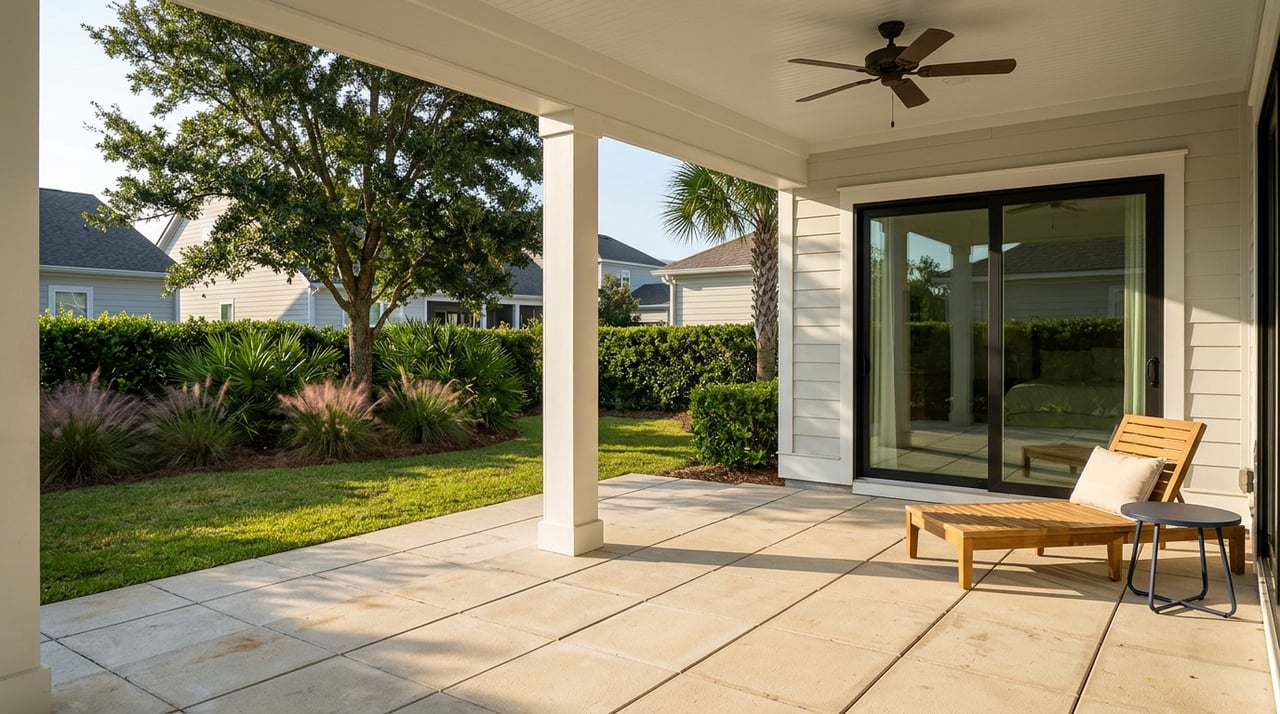
If you want an outdoor space that feels true to WaterColor, start with the porch. The community’s design language strongly favors porches as transitional spaces between indoors and out, especially within a Southern coastal vernacular.
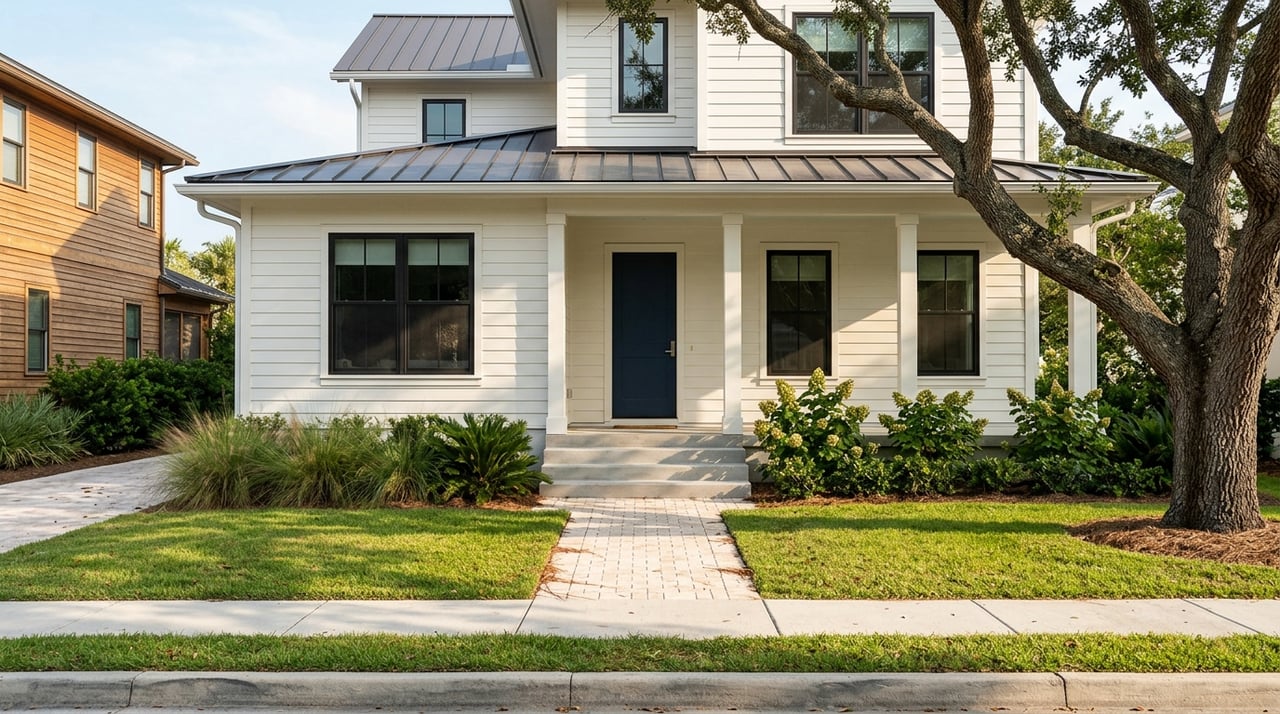
In Phase V, the front porch is required on the main body of the house, and the overall home should read as a vernacular Southern wood house with deep overhangs, shade, and ventilation. In practical terms, that means the most natural indoor-outdoor flow often begins with a full, shaded porch instead of a large open deck.
For many homeowners, this creates a more useful everyday space. A porch gives you cover from sun and rain, supports cross-breezes, and helps the home feel connected to the site in a more residential way.
Design Screened Porches Carefully
A screened porch can be one of the most comfortable outdoor rooms in WaterColor, especially in a hot, humid climate with frequent warm-season rain. But the screening should look like part of the architecture, not like an afterthought.
Under Amendment WC-4, screen mesh should sit behind pickets below the top rail and be framed between columns, railings, and other vertical and horizontal members. The same guidance calls for vertical screening divisions, which helps the porch maintain a finished architectural rhythm.
Phase V also states that porch screening should be charcoal, grey, or copper in color. That kind of detail may seem small, but in a design-focused community, it shapes how polished and integrated the final result feels.
Know the Limits on Porch Enclosures
It is easy to assume you can fully close in a porch later, but WaterColor places limits on enclosures. Amendment WC-4 states that no more than one-third or two-fifths of a required porch may be enclosed, whether with conditioned space or with shutters or louvered panels.
The same amendment discourages heated or cooled enclosures above or below open porch bays. If you are planning for flexibility, it helps to think about those limits early so your design stays both functional and compliant.
Use Levels to Create Outdoor Flow
One of the more distinctive WaterColor ideas is the vertical relationship between outdoor spaces. In Phase V, porches and stoops should sit a step or less below the first-floor finish, while decks, pools, and pool surrounds should be two or more steps below the adjacent porch or stoop.
That layered approach creates a gentler transition from house to yard. Instead of one large flat platform, you get a sequence of outdoor rooms that feels more residential and more in line with the community’s design character.
For homeowners, this can improve both appearance and use. A raised porch can work as the main living room outside, while a lower courtyard or pool terrace becomes a secondary destination.
Choose Materials That Fit the Setting
Material choice matters in WaterColor because the design philosophy emphasizes simple forms, coastal traditions, and materials and colors that enhance the natural setting. Outdoor spaces should feel durable and well crafted, but also visually calm.
Amendment WC-4 notes that elevated decks, porches, towers, above-grade pool surrounds, and stairs should be wood construction. Hardscape is only permitted on grade, which reinforces the community’s preference for outdoor spaces that feel connected to the site rather than overly engineered.
This is one reason a porch-first plan often works so well. It supports the layered, wood-based architectural language that WaterColor already favors.
Plan Pools as Part of the Site
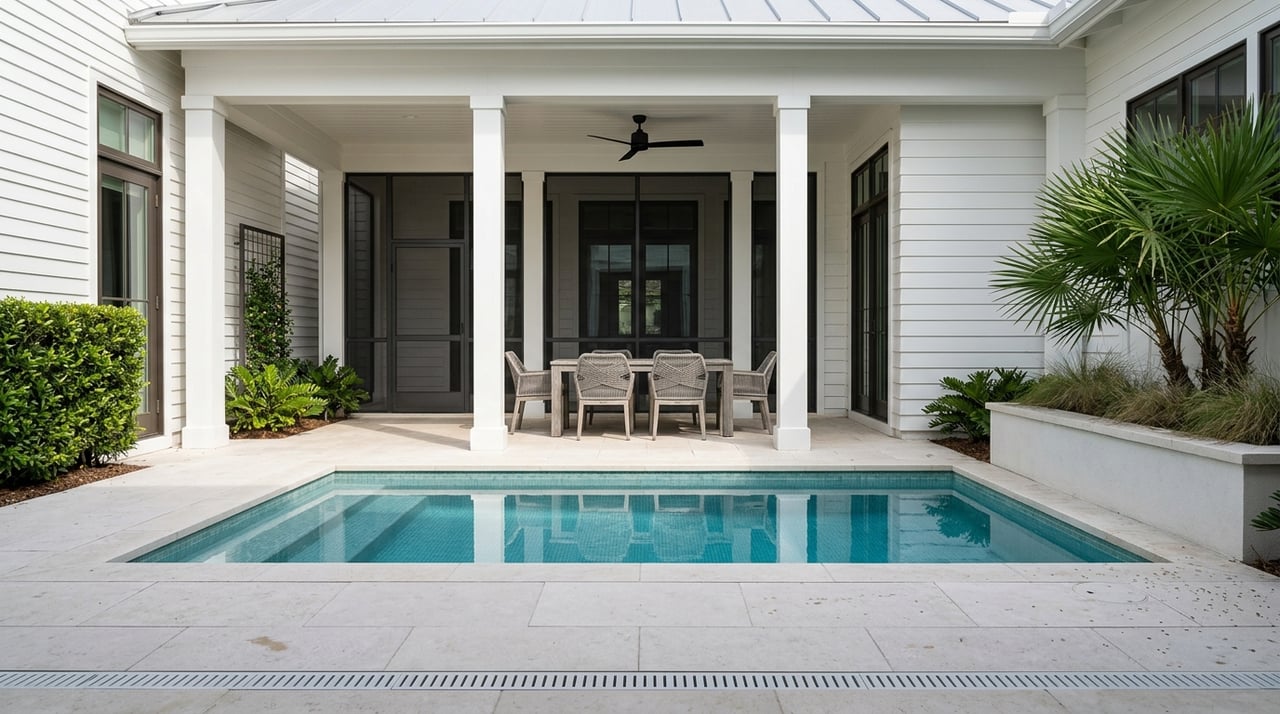
Pools and spas are allowed in WaterColor, but they are carefully controlled. In Phase V, pools are not permitted in front or side façade zones, must remain outside setback lines, must keep the water’s edge at least 2 feet 6 inches from any structure, and cannot be placed in porches.
These rules push pool design toward a more private, integrated rear-yard layout. They also support the idea that a pool should feel like a residential extension of the house, not the main visual feature from the street.
If a pool includes raised walls, Phase V calls for full-dimension brick or sand or tabby stucco rather than smooth stucco. Pool equipment should also be screened, use low-noise pumps, and keep lighting minimal.
Make Outdoor Kitchens Feel Residential
Outdoor kitchens can work beautifully in WaterColor when they read as a natural extension of the house. In Phase V, exterior kitchen cabinetry should be wood or full-dimension brick, with countertops of stone, stainless steel, or wood.
That material palette keeps the space grounded in the home’s architecture. It also supports a quieter, more residential look instead of a commercial or resort-style installation.
When you plan an outdoor kitchen, it is worth thinking about nearby utility elements from the start. WaterColor’s guidelines say compressors, meters, and other equipment should be grouped and screened with landscaping and or wood details that harmonize with the exterior.
Treat Courtyards as Outdoor Rooms
Courtyards can be especially effective in WaterColor because they create protected outdoor living areas without relying on oversized open hardscape. They also fall clearly within the community’s approval scope, along with patios, terraces, walks, driveways, and pools.
The review documents ask applicants to show grading, existing vegetation, proposed vegetation, utility elements, and screening details. That signals an important design lesson: a courtyard should be planned as part of the complete site composition, not as a stand-alone paved area.
In practice, the most successful courtyards often balance hardscape, planting, shade, and privacy screening. That kind of layered design tends to feel more settled and more aligned with WaterColor’s natural setting.
Design for Heat, Humidity, and Rain
Florida’s climate plays a major role in what works outside. The Panhandle is among the wettest parts of the state, and summer conditions often bring high humidity and convective thunderstorm rainfall. Coastal areas also tend to feel more humid because of warm water bodies and afternoon sea breezes.
That is why shade, screened rooms, ventilation, and stormwater planning are not just nice extras in WaterColor. They are practical design responses to how the space will actually be used.
WaterColor’s own guidelines reflect this. Phase V calls for deep roof overhangs, ample shade and ventilation, and low-profile roof forms. It also requires gutters and downspouts to collect roof runoff and discharge it into the stormwater system.
Respect Landscaping and Screening
Outdoor living design is not just about structures. WaterColor’s landscape rules reinforce shade and privacy with live oaks, pine-needle mulch, and dense vegetation along common-area edges.
That means planting design can do a lot of the work in making an outdoor area comfortable and visually soft. It can also help screen service elements, define courtyards, and create a better transition between pool areas, porches, and the rest of the lot.
If you are planning a new outdoor space, think of landscape as part of the architecture. In a place like WaterColor, it is part of the room.
Understand Approval and Permitting
Before construction begins, approval and permitting should be part of the conversation. WaterColor states that DRB approval is not a substitute for other required permits or code compliance.
For residential pools in Walton County, the county checklist requires proof of ownership and a planning-approved site plan. In a coastal V zone, the county also requires two sets of plans stamped and sealed by a Florida registered architect or engineer.
The county’s residential pool permit form also states that all swimming pools must be enclosed by at least a 4-foot fence or a screen enclosure with self-closing, self-latching gates before final inspection. If a lot is seaward of the Coastal Construction Control Line, Florida DEP regulates structures and activities that can affect erosion, dunes, upland properties, public access, sea turtles, and dune plants.
A Smart WaterColor Design Sequence
If you are trying to prioritize features, a simple sequence often makes the most sense in WaterColor:
- Start with the porch as the main outdoor living room.
- Add a screened area if you want longer seasonal comfort and bug protection.
- Shape a courtyard or terrace as a connected on-grade extension.
- Place the pool carefully within setbacks and away from front or side façade zones.
- Integrate the outdoor kitchen and utilities so they support the house instead of competing with it.
- Use planting and screening to tie the full site together.
This approach reflects what WaterColor tends to reward: outdoor spaces that feel shaded, integrated, and residential at every scale.
If you are thinking about building or refining a home in WaterColor, the best results usually come from planning the site, architecture, and outdoor rooms together from the start. That is where local knowledge, design discipline, and buildability matter most. If you want a team that understands how coastal living, community standards, and construction execution work together, connect with Boswell Builders.
FAQs
What makes outdoor living design different in WaterColor?
- WaterColor reviews many exterior and site changes, and its guidelines emphasize porch-centered, climate-responsive, residential outdoor spaces that fit the architecture and lot.
Can you fully enclose a porch in WaterColor?
- Not always. Amendment WC-4 limits how much of a required porch may be enclosed and discourages heated or cooled enclosures above or below open porch bays.
Are screened porches allowed in WaterColor?
- Yes, screened porches are allowed, but the screening must be integrated into the architecture with framed divisions and approved screen colors such as charcoal, grey, or copper.
Where can a pool go on a WaterColor lot?
- In Phase V, pools cannot be placed in front or side façade zones, must stay outside setback lines, cannot be located in porches, and must maintain required clearance from structures.
Do WaterColor outdoor projects need permits beyond community approval?
- Yes. WaterColor states that DRB approval does not replace required permits or code compliance, so county and, in some cases, coastal regulatory approvals may still apply.
Why are porches so important in WaterColor home design?
- WaterColor’s design language favors porches as transitional spaces that provide shade, ventilation, and a strong connection between the house and the site.